Published on Gelassen.in | Tea, Mindfulness & Mindful Living
Every year, sometime in mid-March, something remarkable happens in the Himalayan foothills of West Bengal. The tea gardens of Darjeeling — which have lain quiet and frost-touched through the winter months — begin to stir. The cold retreats. The mist softens. And from the ancient tea bushes, the first tender shoots of the new season emerge.
These first leaves — the very first harvest of the year — become what tea lovers around the world consider one of the most extraordinary beverages on earth: first flush Darjeeling tea.
Rare, intensely aromatic, delicately flavored, and harvested across only a few precious weeks each spring, first flush Darjeeling is the tea equivalent of a vintage wine. Understanding what it is, what makes it special, and how to drink it is an invitation into one of the most refined and rewarding corners of tea culture.
At Gelassen, we believe that the best cup of tea is one you understand deeply and drink with full attention. So let us walk you through everything there is to know about first flush Darjeeling tea — unhurriedly and completely.
What Is First Flush Darjeeling Tea?
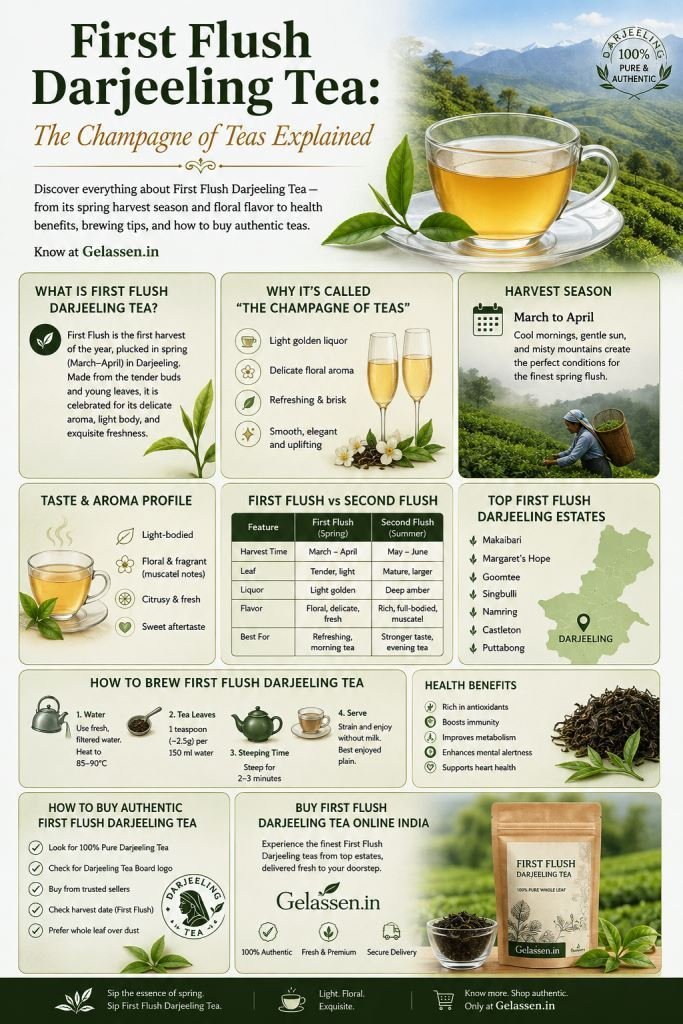
First flush Darjeeling tea is the first harvest of the annual tea-growing season in the Darjeeling district of West Bengal, India. The term “flush” refers to a seasonal harvest cycle, and the first flush — also called the spring flush — captures the very first new growth of the year after winter dormancy.
The harvest window is brief: typically from mid-March to late April, though in some years it can begin as early as late February at lower-altitude gardens. The harvest lasts only a few weeks at each estate before the plants are rested ahead of the second flush.
What is harvested during this period is extraordinarily precious: the “two leaves and a bud” — the topmost bud and two youngest leaves on each shoot — plucked by hand with careful precision. These are the most tender, most aromatic, and most nutritionally concentrated parts of the plant.
Why Is First Flush Darjeeling So Special?
1. The Gift of Winter Dormancy
Through the cold months of November to February, Darjeeling’s tea bushes rest. Growth stops almost entirely. During this period, the plants concentrate sugars, amino acids, aromatic compounds, and nutrients within their woody stems and roots.
When spring warmth and moisture arrive and the first shoots emerge, they carry all of that concentrated energy in their young leaves. This is why first flush teas have a vibrancy and aromatic intensity that no other harvest of the year can match — the plants are, in effect, giving everything they have stored through winter into those first tender buds.
2. The Cool Spring Climate
Darjeeling’s spring conditions — cool temperatures, morning mists, gentle rains, and clear Himalayan afternoons — slow the growth of the tea plants deliberately. Slow growth means the leaves spend more time developing their flavor compounds before being plucked. The result is a tea of extraordinary delicacy and complexity, impossible to replicate in warmer, faster-growing climates.
3. Minimal Oxidation: Between Black and Green
One of the most distinctive features of first flush Darjeeling is its low oxidation level — typically between 20% and 60%, which technically places it between green tea and black tea on the processing spectrum. Many first flush teas are closer in character to a fine oolong than to a conventional black tea.
This minimal oxidation is intentional. Tea makers preserve the fresh, floral, and vegetal character of the spring leaves by limiting the time the rolled leaves are allowed to oxidize before firing. The result is a tea that retains a high concentration of green tea’s celebrated antioxidants — particularly EGCG (Epigallocatechin gallate) — while still developing the complexity that Darjeeling’s unique terroir imparts.
4. Rarity and Limited Production
The first flush harvest window is short, the plucking standards are exacting, and the quantity of tea produced is small. Darjeeling as a whole produces only around 7–9 million kilograms of certified tea annually — a modest figure compared to Assam’s production — and first flush represents only a fraction of that. This natural scarcity contributes to its premium status and pricing.
What Does First Flush Darjeeling Tea Taste Like?
For those accustomed to strong, milk-friendly black teas, first flush Darjeeling can be a revelatory and occasionally surprising experience. It is nothing like Assam, Ceylon, or chai-base black tea. It is lighter, more aromatic, more complex — and far more delicate.
Here is a detailed breakdown of its sensory profile:
Appearance in the Cup
The brewed liquor of a well-made first flush Darjeeling is pale — sometimes startlingly so. Colors range from a soft, luminous gold to a very pale amber, occasionally with greenish tints in lightly oxidized teas. Poured into a glass cup, it can look almost like a white wine or a very pale apple juice. First-time drinkers sometimes wonder if the tea has brewed at all.
Aroma
The aroma is where first flush Darjeeling first announces its extraordinary character. It is intensely floral — often compared to orchids, jasmine, rose, or lily — with fresh vegetal undertones of spring grass, green leaves, or fresh herbs. Some teas carry a light citrus note (lemon zest or bergamot) and a clean, almost mineral quality that reflects the Himalayan soils and air. The aroma lifts from the cup immediately and fills the room.
Flavor
On the palate, first flush is delicate and layered. Common tasting notes include fresh florals, spring greenery, light stone fruit (apricot, peach), a gentle astringency that refreshes rather than dries, and a subtle, lingering sweetness. The finish is clean and long. In the finest teas — particularly from high-altitude estates — there is a characteristic “muscatel lite” quality, a whisper of the grape-like sweetness that becomes fully pronounced in second flush teas.
Mouthfeel
Light-bodied, refreshing, with a gentle astringency that tea connoisseurs describe as “brisk.” Unlike the full, round body of a second flush or the bold weight of an Assam, first flush Darjeeling is airy and clean — like drinking spring itself.
The Health Benefits of First Flush Darjeeling Tea
First flush Darjeeling is not only a sensory pleasure — it is also one of the most nutritionally rich teas available. Its lighter oxidation means it retains a notably high concentration of beneficial compounds.
Rich in EGCG and Catechins
Because first flush teas undergo less oxidation than second flush or monsoon teas, they retain more of the original catechins — particularly EGCG (Epigallocatechin gallate), the most studied and potent antioxidant found in tea. EGCG is associated with anti-inflammatory properties, metabolic support, and cellular protection against oxidative stress.
L-Theanine: Calm Focus Without the Jitters
First flush Darjeeling — especially teas from high-altitude gardens with cool spring temperatures — is notably high in L-theanine, an amino acid unique to tea plants. L-theanine promotes a state of calm mental alertness by modulating the brain’s alpha waves, reducing acute stress and anxiety while enhancing focus and concentration.
When combined with the moderate caffeine naturally present in first flush tea, L-theanine creates what researchers describe as “alert relaxation” — a smooth, sustained energy that avoids the spikes and crashes associated with coffee. This is why many practitioners of mindfulness, meditation, and focused work specifically favor first flush Darjeeling as their beverage of choice.
Antioxidant Protection
The polyphenols in first flush Darjeeling — including catechins, flavonoids, and small amounts of the theaflavins that develop with oxidation — neutralize free radicals in the body and help protect against oxidative stress linked to aging, inflammation, and chronic disease.
Cardiovascular Support
Regular tea consumption has been extensively studied for its cardiovascular health benefits. The polyphenols in Darjeeling tea support healthy blood pressure, reduce LDL cholesterol oxidation, and improve vascular elasticity — all contributing to long-term heart health.
Digestive Wellness
The polyphenolic compounds in Darjeeling tea support a healthy gut microbiome by promoting the growth of beneficial bacteria and inhibiting harmful pathogens. First flush teas, with their lighter body and lower tannin content compared to fully oxidized teas, are particularly gentle on the digestive system.
Metabolic Support and Weight Management
The combination of catechins and caffeine in first flush Darjeeling has been shown to modestly boost metabolism and support fat oxidation — making it a thoughtful addition to a mindful approach to weight management, alongside a healthy diet and regular movement.
Neuroprotective Properties
Indian researchers have suggested that bioactive compounds in Darjeeling tea — particularly L-theanine and EGCG — may support cognitive health and could play a role in reducing the risk of neurodegenerative conditions. While research is ongoing, the evidence points consistently toward tea as a beverage that nourishes the brain as well as the body.
First Flush vs. Second Flush Darjeeling: How Do They Compare?
Understanding the difference between the two most celebrated Darjeeling flushes helps you choose the right tea for your mood, the time of day, and your palate.
| Feature | First Flush | Second Flush |
|---|---|---|
| Harvest Season | Mid-March to late April | May to mid-June |
| Oxidation Level | Low–Medium (20–60%) | Medium–High (60–80%) |
| Color in Cup | Pale gold, soft amber | Deep amber, copper-gold |
| Aroma | Floral, fresh, light, vegetal | Muscatel, fruity, wine-like, heady |
| Flavor | Delicate, brisk, floral, spring-fresh | Full-bodied, complex, grape-like, warm |
| Body | Light | Medium to full |
| Astringency | Gentle and refreshing | Moderate and smooth |
| L-Theanine | Higher (due to cool spring conditions) | Moderate |
| EGCG Content | Higher (lighter oxidation) | Moderate |
| Best Drunk | Plain, no milk | Plain or with a small amount of milk |
| Price | Premium to very premium | Premium |
| Best For | Morning mindfulness, focused work, delicate palates | Afternoon richness, complexity seekers, wine lovers |
In summary: First flush is the season of delicacy and awakening. Second flush is the season of richness and full expression. Both are extraordinary — and both deserve a place in your tea life.
The Best First Flush Darjeeling Tea Estates
The character of a first flush Darjeeling tea is deeply influenced by the estate it comes from. Here are some of the most celebrated gardens producing exceptional spring flushes:
Makaibari Tea Estate
The world’s oldest tea estate (established 1859) and India’s first biodynamic and organic estate. Makaibari’s first flush teas are legendary — intensely floral, remarkably pure, and produced with an almost philosophical commitment to sustainability. Their Silver Tips and spring white teas are among the most sought-after teas produced anywhere on earth.
Thurbo Tea Estate
Located in the high-altitude Mirik Valley at elevations that push the limits of where tea can be grown, Thurbo’s first flush teas are celebrated for their extraordinary floral intensity. The cool, misty conditions at this altitude produce a tea of remarkable delicacy and aromatic precision.
Namring Tea Estate
Namring’s first flush offerings are known for their smooth, honeyed notes layered beneath a clean floral character — teas of quiet elegance and consistent quality, beloved by connoisseurs who prefer refinement over drama.
Jungpana Tea Estate
A small, high-altitude boutique estate that produces first flush teas of intense complexity and aromatic depth. Jungpana is a name whispered reverently among serious tea collectors. Their spring lots sell out quickly and are worth seeking.
Goomtee Tea Estate
In the Kurseong sub-division, Goomtee is celebrated for producing first flush teas that are vibrantly fresh and complex — with what reviewers describe as an almost “overpowering” freshness that makes it one of the most exciting spring teas in the region.
Castleton Tea Estate
While Castleton is most famous for its second flush muscatel, its first flush teas are also exquisite — floral, fragrant, and carrying a characteristic elegance that reflects the estate’s exceptional growing conditions.
How to Brew First Flush Darjeeling Tea Perfectly
First flush Darjeeling is a tea that rewards care in brewing. Treat it like a fine Assam and you will be disappointed — its delicacy requires a gentler approach.
What You Need
- Water: Fresh, filtered water — ideally with neutral to soft mineral content. Avoid tap water with strong chlorine. The quality of your water is the single most important variable in brewing a fine Darjeeling.
- Temperature: 85°C to 90°C (185°F) — never boiling. Boiling water will scorch the delicate first flush leaves, extracting bitter tannins and destroying the floral aromatics you are paying for. Let the kettle cool for 2–3 minutes after boiling, or use a temperature-controlled kettle.
- Quantity: 2–3 grams per 200 ml (approximately 1 heaped teaspoon of loose leaf). First flush is best brewed lighter than you might brew a black tea.
- Steeping Time: 2 to 3 minutes — no more. Over-steeping first flush extracts excess tannins and turns the brew bitter and flat. Start with 2 minutes and adjust to your preference.
- Vessel: A glass or porcelain teapot or infuser — ideally clear glass so you can watch the pale liquor develop. Avoid stainless steel infusers that retain heat and risk over-extraction.
Step-by-Step Brewing
- Warm your teapot or cup by rinsing with hot water and discarding.
- Measure 2–3 grams of first flush leaves per 200 ml of water.
- Heat fresh, filtered water to 85–90°C.
- Pour the water gently over the leaves.
- Steep for exactly 2 minutes for the first infusion.
- Pour through a fine strainer into a clear glass cup.
- Observe the color. Inhale the aroma. Then drink — slowly.
Milk or No Milk?
Emphatically: no milk for first flush Darjeeling. Milk proteins bind to the delicate polyphenols and catechins, neutralizing the floral aromatics and flattening the nuanced flavor profile that makes first flush worth drinking. First flush is a tea to be experienced in its purest form — just tea and water.
Multiple Infusions
High-quality first flush loose-leaf teas — particularly whole-leaf grades like FTGFOP1 — can yield two to three excellent infusions. The second infusion (1–2 minutes, same temperature) often opens differently from the first — sometimes more floral, sometimes more vegetal, always worth exploring.
How to Buy Authentic First Flush Darjeeling Tea
With the premium pricing of first flush Darjeeling comes the risk of imitation and adulteration. Here is how to ensure you are buying the real thing:
Look for the GI Certification Mark
Authentic Darjeeling tea carries the Darjeeling logo issued by the Tea Board of India — a distinctive certification mark that guarantees the tea was grown and produced within the Darjeeling district. If this mark (or a clear statement of GI certification) is absent, be cautious.
Check for the DJ Lot Number
Genuine estate teas will carry a DJ lot number — a traceability code assigned by the Tea Board of India that identifies the specific batch, estate, flush, and year. This is the gold standard of Darjeeling authenticity.
Buy from Reputable Sources
Purchase from established specialty tea retailers, directly from estates, or through reputable importers. In India, platforms like Golden Tips Tea, Gopaldhara, Makaibari’s own store, and select specialty tea online website Gelassen Tea source directly and transparently.
Read the Label Carefully
A trustworthy first flush Darjeeling should tell you: the estate name, the harvest year and flush, the leaf grade (e.g., FTGFOP1), and ideally the lot number. Vague labels saying only “Darjeeling Tea” without estate information are a warning sign.
Expect to Pay a Premium
Authentic first flush Darjeeling is not cheap — and for good reason. The short harvest window, exacting plucking standards, skilled processing, limited production, and global demand combine to make it genuinely rare. A first flush priced like everyday black tea is almost certainly not the real thing.
Buy Fresh — and Drink Fresh
First flush teas are prized for their freshness and vibrancy. Unlike aged Pu-erh or some second flush teas that benefit from time, first flush is best enjoyed within 6 to 12 months of harvest. Look for teas from the most recent season. Many specialty retailers stock new season teas from March onwards each year.
Storing First Flush Darjeeling Tea
To preserve the delicate aromatics of your first flush tea:
- Store in an airtight tin or opaque ceramic container — away from light, heat, and moisture.
- Keep away from strongly scented foods, spices, or other teas — first flush readily absorbs external odors.
- Store at room temperature — not in the refrigerator (unless vacuum-sealed and in airtight packaging designed for cold storage).
- Consume within 6–12 months of purchase for peak freshness.
First Flush Darjeeling and the Art of Mindful Drinking
At Gelassen, we often speak about tea as a practice of presence — a daily ritual that asks you to slow down, pay attention, and be fully in the moment.
No tea embodies this invitation more completely than first flush Darjeeling.
Consider what went into your cup. Tea bushes that spent the entire winter gathering energy for this single spring moment. The careful hands of pluckers — mostly women — who walked the steep Himalayan slopes before dawn to gather these first tender leaves. A tea maker who watched the oxidation with precision, timing the firing to the exact minute. A supply chain that moved the tea from garden to cup within weeks, preserving the freshest possible version of that spring morning.
When you hold a cup of first flush Darjeeling, you are holding all of that. The Himalayas in spring. The patience of dormancy rewarded. The precision of craft. The generosity of a plant that gives its best first.
Drink it slowly. Without your phone. Without distraction. Let the aroma arrive before the sip. Notice the color. Notice the finish — that clean, lingering floral note that stays long after the cup is empty.
This is what gelassen means: unhurried, composed, fully present. And this is what first flush Darjeeling, at its finest, can teach you — one cup at a time.
Frequently Asked Questions
Q: When is first flush Darjeeling tea harvested?
First flush Darjeeling is typically harvested from mid-March to late April each year, with some lower-altitude estates beginning as early as late February. The exact timing varies with seasonal conditions each year.
Q: Is first flush Darjeeling a black tea or a green tea?
Technically it is classified as black tea by the Tea Board of India, but with an important qualification: most first flush teas are only lightly oxidized (20–60%), placing them closer to an oolong or even a green tea in character. They are distinctly different from fully oxidized black teas like Assam.
Q: Why is first flush Darjeeling tea so expensive?
The price reflects genuine rarity and quality: a short harvest window, labor-intensive hand-plucking, skilled processing, limited total production from a small geographical region, and very high global demand from connoisseurs worldwide.
Q: Can I drink first flush Darjeeling with milk?
It is strongly recommended to drink first flush Darjeeling without milk. Milk neutralizes the delicate floral aromatics and binds to the catechins, significantly diminishing the tea’s character and health benefits.
Q: How is first flush different from second flush Darjeeling?
First flush is lighter, more floral, and more delicate — with higher L-theanine and EGCG content. Second flush is fuller, richer, and characterized by the famous “muscatel” grape-like flavor. Both are prized, but for different reasons and different moments.
Q: How much caffeine does first flush Darjeeling tea contain?
First flush Darjeeling contains moderate caffeine — generally somewhat less than second flush or fully oxidized black teas, due to its lighter processing. A typical 200 ml cup contains approximately 30–50 mg of caffeine, compared to 80–100 mg in coffee.
Q: How many times can I steep first flush Darjeeling leaves?
High-quality whole-leaf first flush teas can typically be steeped 2–3 times. The second infusion often reveals different aromatic notes not present in the first. Broken-grade teas generally yield one strong infusion.
Q: What is the best way to store first flush Darjeeling tea?
In an airtight tin or opaque ceramic container, away from heat, light, moisture, and strong odors. Consume within 6–12 months of purchase for peak freshness and flavor.
In Summary: Why First Flush Darjeeling Belongs in Your Life
First flush Darjeeling tea is more than a seasonal specialty. It is a reminder that the most extraordinary things in life are also the most fleeting — and that paying attention to them is what transforms a routine into a ritual, and a beverage into an experience.
Its brief harvest window makes it precious. Its delicate flavor makes it demanding — of water quality, of brewing precision, of your full attention. Its connection to a specific place, a specific season, and skilled human craft makes it meaningful.
If you have never tasted a well-brewed first flush Darjeeling, you have a genuine pleasure ahead of you. And if you already love it, then you already know: there is no more eloquent expression of spring in a cup.
Explore more about tea culture, wellness, and mindful living at gelassen.in
Tags: first flush Darjeeling tea, spring flush tea, Darjeeling tea benefits, first flush vs second flush, how to brew Darjeeling tea, best Darjeeling tea estates, FTGFOP1, Darjeeling GI tag, L-theanine tea, EGCG antioxidants, Himalayan tea, mindful drinking